Safety & Risks
Mold on a Refrigerator Door Seal: Cleaning It Without Wrecking the Gasket
Use warm water with a little dish soap, or a solution of baking soda in warm water, on a soft cloth or an old toothbrush for the folds. Then dry the gasket completely — drying matters more than the cleaning agent. Avoid bleach and undiluted vinegar: both attack the rubber over time and turn a cleaning job into a gasket replacement.
The full guide
Why it happens here more than elsewhere
A door gasket is a folded rubber channel that spends its life alternating between cold and room temperature. In a humid climate that means condensation inside the folds, several times a day, in a place that never sees direct air.
That is the whole mechanism, and it explains the two things people find surprising: that it appears on a clean kitchen's refrigerator, and that it always starts at the bottom corners.
What to use
Warm water with a little dish soap, or a tablespoon of baking soda in warm water. A soft cloth for the flat faces and an old toothbrush for the folds — the folds are the whole job, and they are the part a wipe never reaches.
Peel the fold back gently as you work. It is designed to move; it is not designed to be pulled hard, and the magnet strip inside will kink if you fight it.
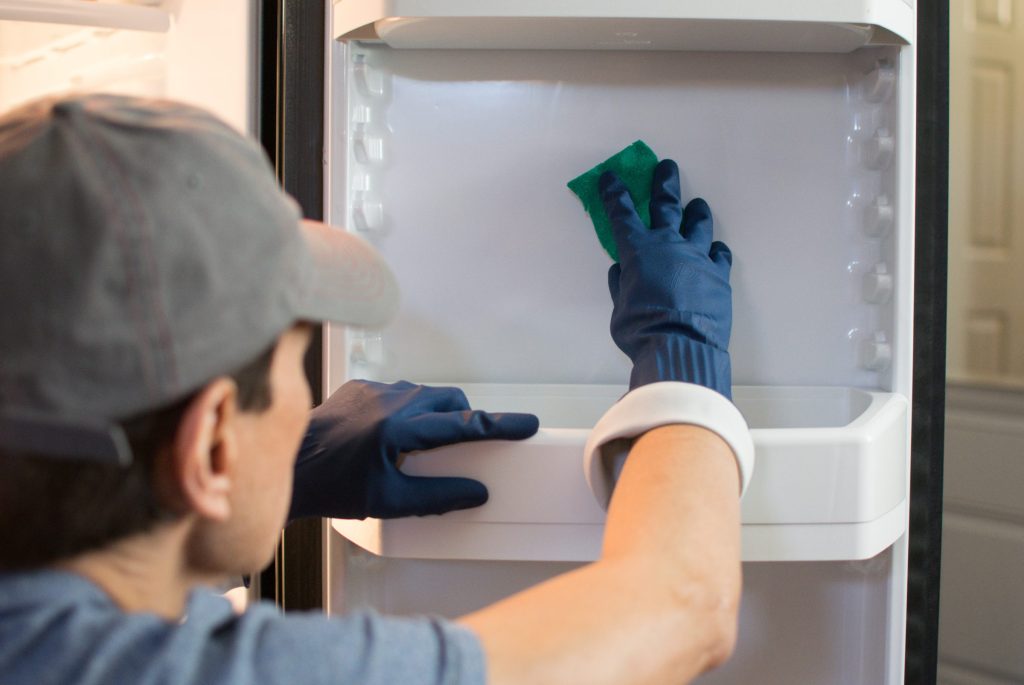
Then dry it. Properly, with a dry cloth, into the folds. This matters more than which cleaner you chose, because mold needs the moisture rather than the dirt.
What not to use. Bleach hardens and cracks the rubber over the following months, and undiluted vinegar is acidic enough to do its own slower version of the same thing. Both work on the mold and both shorten the life of a gasket that is neither cheap nor quick to replace on a built-in column.
Do the same for the drip channel and the pan
While the door is open: the channel at the back of the refrigerator compartment carries melt water to a pan underneath, and both grow their own colony. A blocked drain also puts water where it does not belong, which produces mold in a second place and a puddle in a third. Clearing a drain line takes ten minutes and it is worth doing on the same afternoon.
When mold is telling you the seal has failed
If it returns within a couple of weeks of a proper clean, stop cleaning and start testing.
The paper test. Close a sheet of paper in the door and pull. It should grip. Do it at four points on each side — seals fail at the bottom corners first, which is exactly where the mold is.
Where the paper slides out, warm humid air is arriving continuously, condensing on the coldest surface it meets, and feeding the thing you keep wiping off. At that point the answer is an adjustment or a gasket rather than a cleaning routine, and it also explains a cabinet that has been running more than it used to.
Keeping it away
- Dry the folds whenever you clean the inside of the cabinet. Once a month is plenty.
- Wipe spills on the seal itself, not just the shelf. Sugar in a fold is food.
- Do not leave the door ajar to "air it out" — on a cold cabinet in this climate that produces condensation rather than removing it.
- Check the seal twice a year with the paper test, which takes a minute and catches the real cause early.
If the gasket has gone
On a Freedom column the door carries your cabinet panel, so a gasket change ends with the door being set back to the line of the cabinets beside it. That part is the reason we would rather do it than talk you through it — the seal is straightforward and the alignment is the job.
What a door and gasket repair involves, and what it starts at.
If it turns out to be a repair
What this leads to, and what it costs
Every job on this site is priced the same way: an on-site diagnostic first, the figure agreed in writing before anybody starts.
-
from $220 Refrigerator door and gasket repair
A door alarm that keeps sounding, frost where there should not be any, or a panelled door that no longer lines up with the cabinets beside it.
- The door alarm treated as evidence, not a nuisance
- Panelled doors reset to the joinery line
- Gaskets replaced only when adjustment will not do it
-
from $165 Door seal and hinge repair
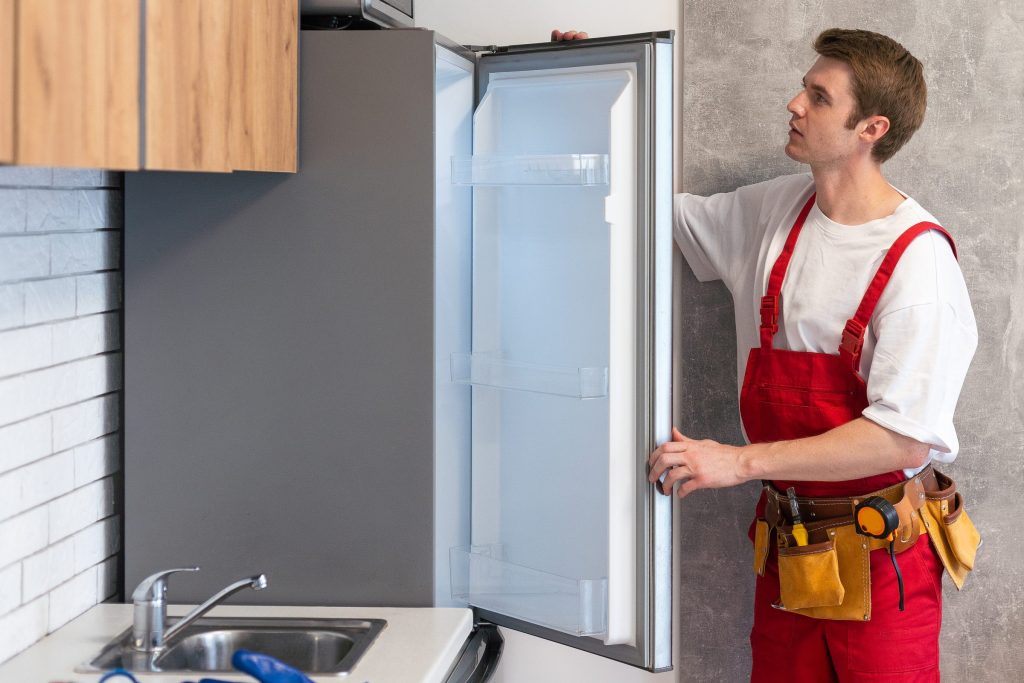
A door that does not sit square, a seal that has gone hard, or a professional door that has dropped on its hinges. The same job across the kitchen, and on built-in equipment it is adjustment as much as parts.
- Seals tested with paper, not by eye
- Hinges adjusted rather than replaced where they can be
- Panelled doors reset to the cabinetry
-
The alarm is the code Refrigeration alarm sounding
A column beeping with the alarm symbol lit, or a door signal that will not clear. Each alarm means something specific, and one of them is holding a number you will want before you silence it.
- Temperature flashing with an alarm symbol
- A continuous tone with the door signal
- An alarm that returns after being cleared
-
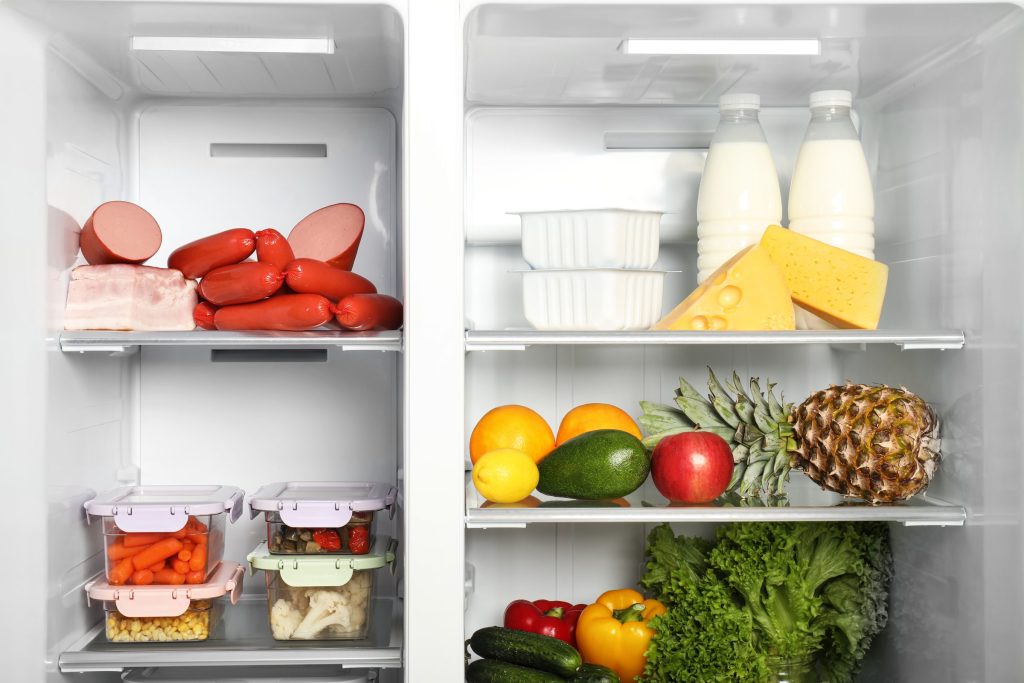
Freedom columns · French door · Under-counter Built-in refrigerators & columns
A Freedom column is one cabinet holding one temperature — all refrigerator, no freezer in it — usually installed beside a freezer column as a matched pair behind panels that look like joinery. That makes the diagnosis cleaner and the access harder.
- Not holding temperature
- Frost or condensation inside the cabinet
- A door that no longer seals against its panel

Questions people ask about this
Is mold on a door seal dangerous?
For most people it is unpleasant rather than hazardous, and it is worth removing on the grounds that it sits an inch from your food. It matters more for anyone in the house with asthma or a mold allergy, and it is a reason not to leave it for months.
Why not bleach? It kills mold.
It does, and it also hardens and cracks the rubber over the following months. The gasket on a built-in column is not a cheap or quick part, and a cleaning routine that shortens its life is a bad trade for something that warm soapy water handles.
What about vinegar?
Better than bleach and still not ideal at full strength — it is acidic enough to work on the rubber and on the magnet channel over time. Well diluted and followed by a rinse and a proper drying, it is acceptable.
It comes back within a two weeks.
Then the problem is not cleaning. Either the folds are never drying, or warm humid air is condensing there because the seal is not gripping — which is a door adjustment or a gasket rather than a hygiene question.
Can I replace the gasket myself?
On some models it is a push-fit and on others it is under a retaining strip with the door partly dismantled. On a panelled column door we would rather do it, because the door has to come back aligned to your cabinetry afterwards.
Safety & Risks
More guides like this one
-
Refrigerator Burning Smell: What It Is and What to Do First
The smell that should move somebody today, separated from the ones that should not. Dust on a hot coil, a new appliance curing, a defrost heater doing its job — and the electrical one, with what to do in the first two minutes.
Read more -
How Long Food Stays Safe When the Power Goes Out
Hurricane season, written for a built-in column rather than a refrigerator. The four-hour and forty-eight-hour figures, and the part specific to this brand: the cabinet recorded how warm it got, and it will show you once.
Read more -
Can a Refrigerator Start a Fire?
A question asked in fear and usually answered badly. What can actually overheat in a refrigeration column, why an unplugged appliance is not a hazard, and the three signs that mean stop reading and cut the power.
Read more
Tell us the model number and what it is doing.
This article is based on:
- Official manufacturer documentation
- Internal repair procedures
- Technician repair history
- Company quality standards