Maintenance & Prevention
Cleaning a Thermador Oven Without Running Self-Clean
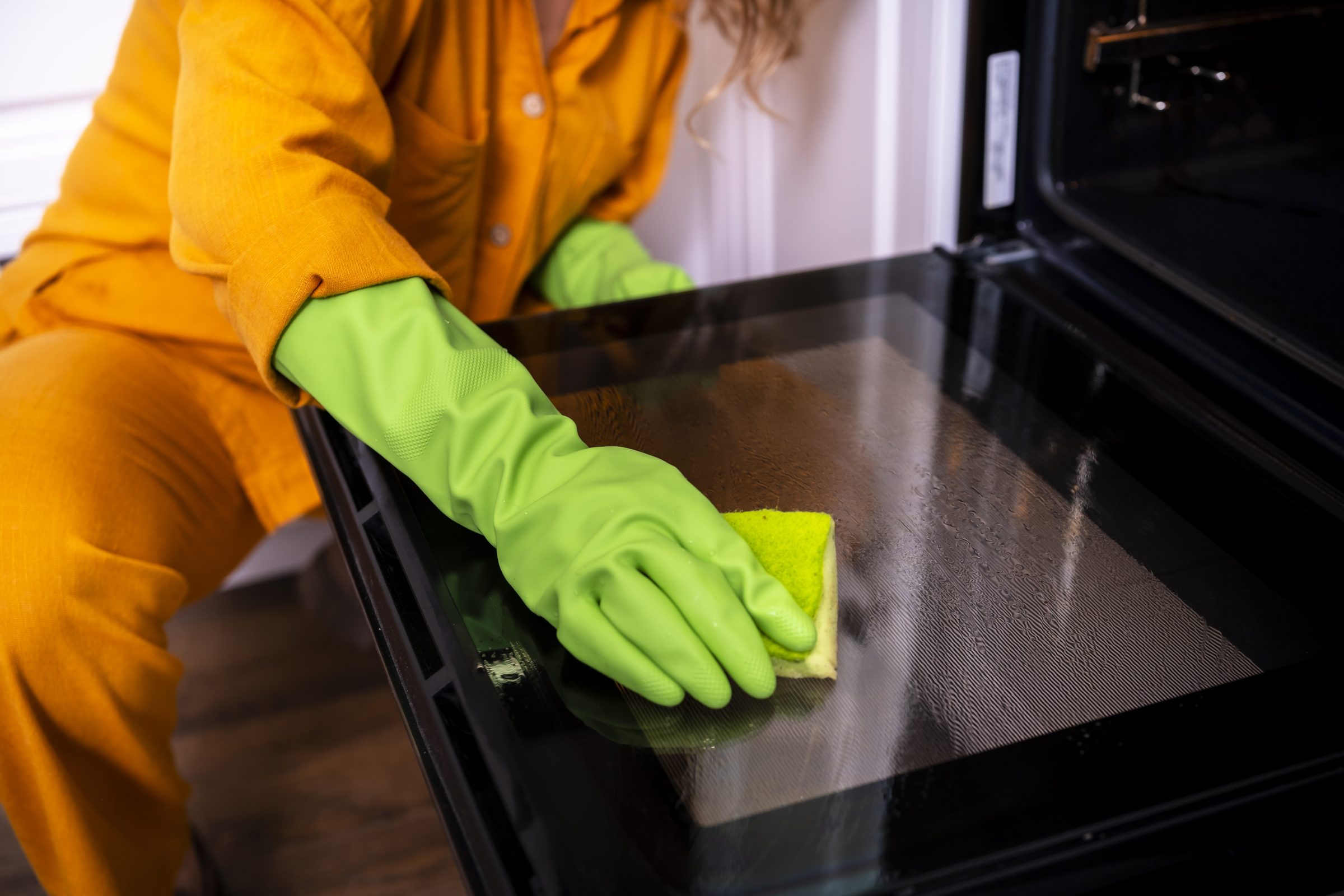
Wipe the cavity while it is still warm after cooking, and for baked-on soil use a paste of baking soda and water left for a few hours, then a plastic scraper and a damp cloth. Keep everything off the door seal, take the racks out to soak, and reserve self-clean for once or twice a year at most — it is the cycle that most often produces a repair.
The full guide
Why we would rather you cleaned it by hand
A self-clean cycle takes the cavity far above any cooking temperature and holds it there for hours. Nothing about that is wrong, and the ovens are built for it. What it does is find every weakness in the door, the latch and the cooling path in a single afternoon — with the door locked shut.
The calls we take the day after a self-clean, in order: a latch that will not release, an oven with no heat because a thermal cutout did its job, and a cavity that smells for a week because nobody wiped the ash out. None of those is caused by the cycle so much as discovered by it, which is cold comfort when Thanksgiving is tomorrow.
If you do run it, run it in the quietest week of your year — never the night before you need the oven. And take the racks out first.
The everyday method
Wipe it while it is still warm. Once the oven has cooled to hand-warm after cooking, a damp cloth removes almost everything before it bakes on. Two minutes, and it is the entire secret to never needing a heavy clean.
Baked-on soil, without chemicals
- Mix baking soda with a little water into a paste.
- Spread it on the cavity floor, walls and the inside of the door glass. Keep it off the seal and off the heating elements.
- Leave it for a few hours, or overnight.
- Lift it off with a plastic scraper — nothing metal on the enamel — and finish with a damp cloth. Repeat on anything stubborn rather than attacking it.
For the door glass, the same paste and a plastic blade. Work with the glass, not across it.
The parts to leave alone
The door seal. Do not scrub it, soak it, or let cleaner sit on it. It is a woven or rubber gasket, it is what keeps the heat where it belongs, and it is easy to shorten its life with a cleaning routine. A wipe with a damp cloth is all it wants.
Between the door glass panels. Sealed for a reason and reassembled in a specific order with specific spacers. If food has found its way in there, it is a technician job.
The heating elements. They burn off what lands on them. Cleaner does not improve that and sitting on them is a smell for the next two weeks.
The racks
Out of the oven and into hot soapy water, or the bathtub with a towel underneath if they are the full-width professional ones. A nylon pad and patience; steel wool takes the finish off.
Coated racks should not go in the dishwasher. Plain chrome ones survive it and come out dull.
If you do run self-clean
- Take everything out — racks, probe, stone, thermometer
- Wipe out the loose soil first. The cycle turns what is left to ash; it does not remove it
- Ventilate the kitchen and run the hood
- Expect the door to lock and to stay locked for around an hour after it finishes. It releases on temperature rather than on a timer, and pulling at it is how a latch job becomes a door job
- Wipe out the ash once it is cold. Otherwise it smells on the next bake, and people conclude the oven is broken
What to do if the door is still locked when the oven is cold — the short version is: do not force it.
The Miami footnote
Kitchens here run hot in August, and a self-clean cycle adds a couple of hours of serious heat into a room the air conditioning is already fighting. It is a small thing, and it is a good argument for doing this in January with the doors open.
If it turns out to be a repair
What this leads to, and what it costs
Every job on this site is priced the same way: an on-site diagnostic first, the figure agreed in writing before anybody starts.
-
Do not force it Oven door locked shut
A self-clean cycle that has finished and a door that will not open. The latch releases on temperature rather than on a timer, and forcing a professional door turns a small repair into a large one.
- Door locked after a clean cycle
- Self-clean that will not start at all
- A latch code in the hundreds
-
Separate new from wrong Oven smoking or smelling
Smoke during a bake, a burning smell on first use, or an odor that has appeared since the last clean cycle. Most of it is what is in the oven rather than the oven itself.
- Smoke at normal baking temperatures
- A burning smell on a new appliance
- A smell that started after self-cleaning
-
from $155 Oven door lock repair
A self-clean latch that will not lock, or worse, will not let go. Four published conditions belong to this one small assembly, which is why it has a page of its own.
- E106, E107, E126 and their lower-cavity twins
- The door opened without bending the frame
- The latch tested through a full cycle
-
Masterpiece · Professional · Steam · Speed Wall ovens & steam ovens
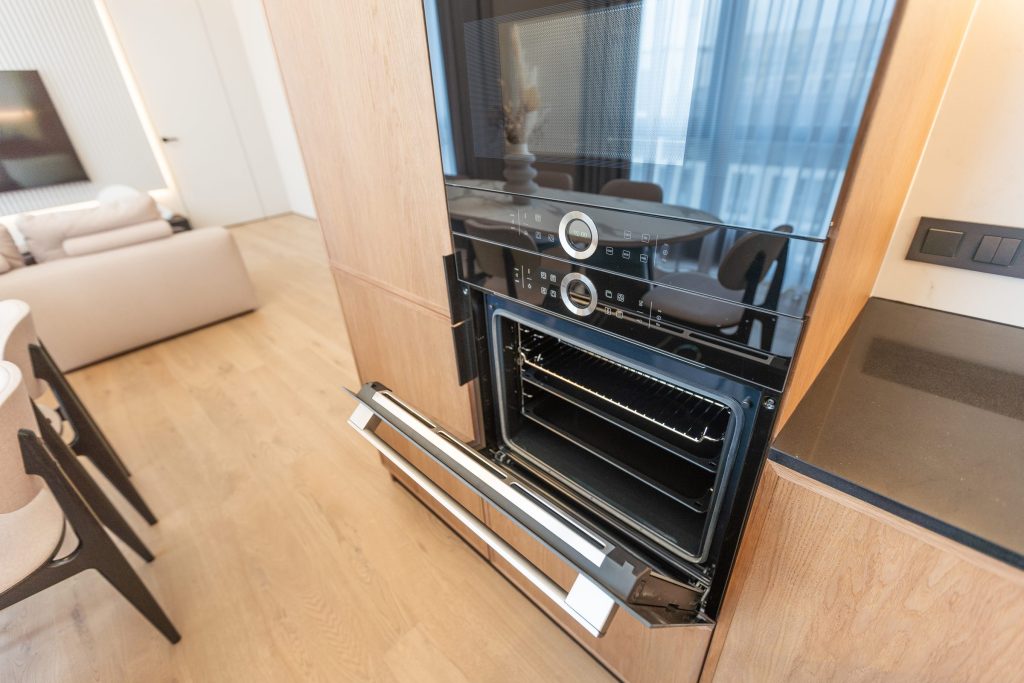
Built in at eye level, often two cavities in one cabinet, and increasingly one of the two is a steam oven with a water circuit of its own. "The oven is broken" almost always means one cavity of the pair, and which one narrows the job considerably.
- Not heating or not holding temperature
- The touch panel unresponsive after a long cycle
- The door locked after a self-clean
Questions people ask about this
Why is self-clean a problem?
It is not, in itself. But it runs the cavity far hotter than cooking does, and heat is what finds a latch that has seized from disuse, a thermal cutout at the end of its life, or a cooling fan that is no longer moving enough air. The cycle does not cause the weakness; it discovers it, usually with the door locked.
Can I use commercial oven cleaner?
In a pyrolytic oven we would rather you did not, and not on the seal, the glass edges or any painted surface under any circumstances. Baking soda paste handles nearly everything and does not attack coatings.
How do I clean between the door glass?
You do not, from the outside. On these doors the glass panels come apart in a specific order and go back with spacers in specific places, which is a technician job rather than an afternoon one.
Can the racks go in the dishwasher?
Chrome racks generally survive it and lose their shine; the ones with a coated finish should be soaked in hot soapy water instead. Either way, take them out before self-cleaning — the cycle discolors them.
My oven has not worked since a self-clean.
Common enough that we could set a calendar by it. Let it cool completely, then five minutes off at the breaker. If it still does not run, the usual suspects are the latch and the thermal cutout, and both are contained repairs.
Maintenance & Prevention
More guides like this one
-
Changing a Thermador Water Filter — and Making the Symbol Stop Flashing
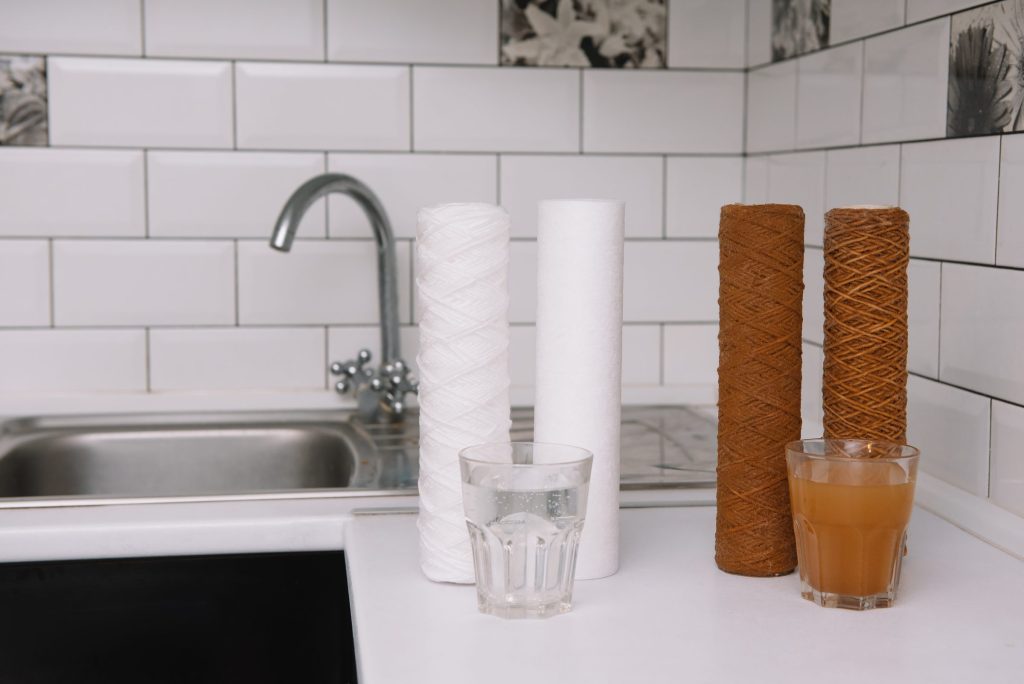
The most searched question about this brand's refrigeration, and the answer is three seconds on two buttons. The full version: which filter, where it lives, why the reminder is a counter rather than a measurement, and the odor filter nobody knows about.
Read more -
How Often Built-In Refrigeration Needs Servicing in South Florida
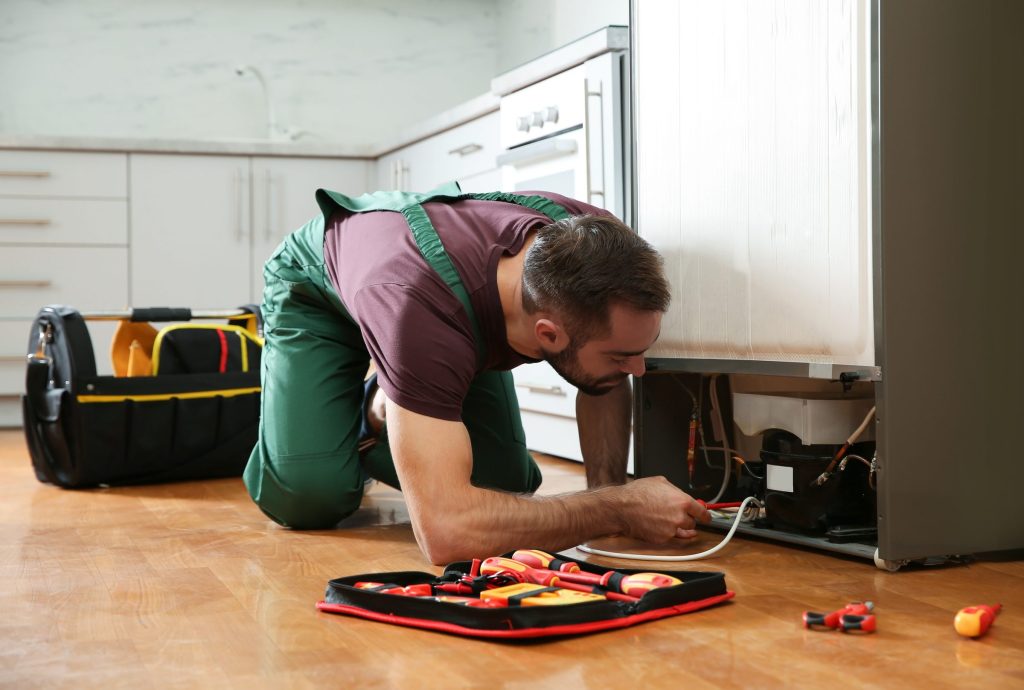
The manual is written for the country. This is written for a climate where a condenser furs up faster and a compressor never gets a cool night off — a yearly schedule for columns, with what you can do and what needs a visit.
Read more -
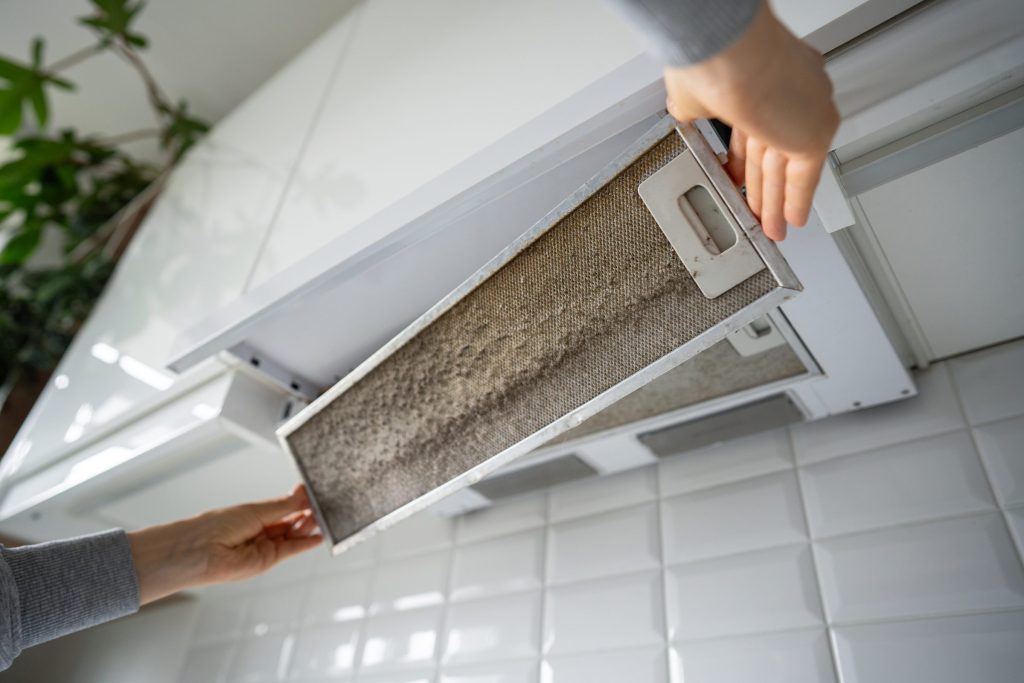
Cleaning Thermador Range Hood Filters (and Why the Hood Went Quiet)
The cheapest maintenance in the kitchen and the most skipped. How to remove and wash baffle filters, how often in a house that actually cooks, and why a saturated filter makes a working hood behave like a broken one.
Read more
Tell us the model number and what it is doing.
This article is based on:
- Official manufacturer documentation
- Internal repair procedures
- Technician repair history
- Company quality standards