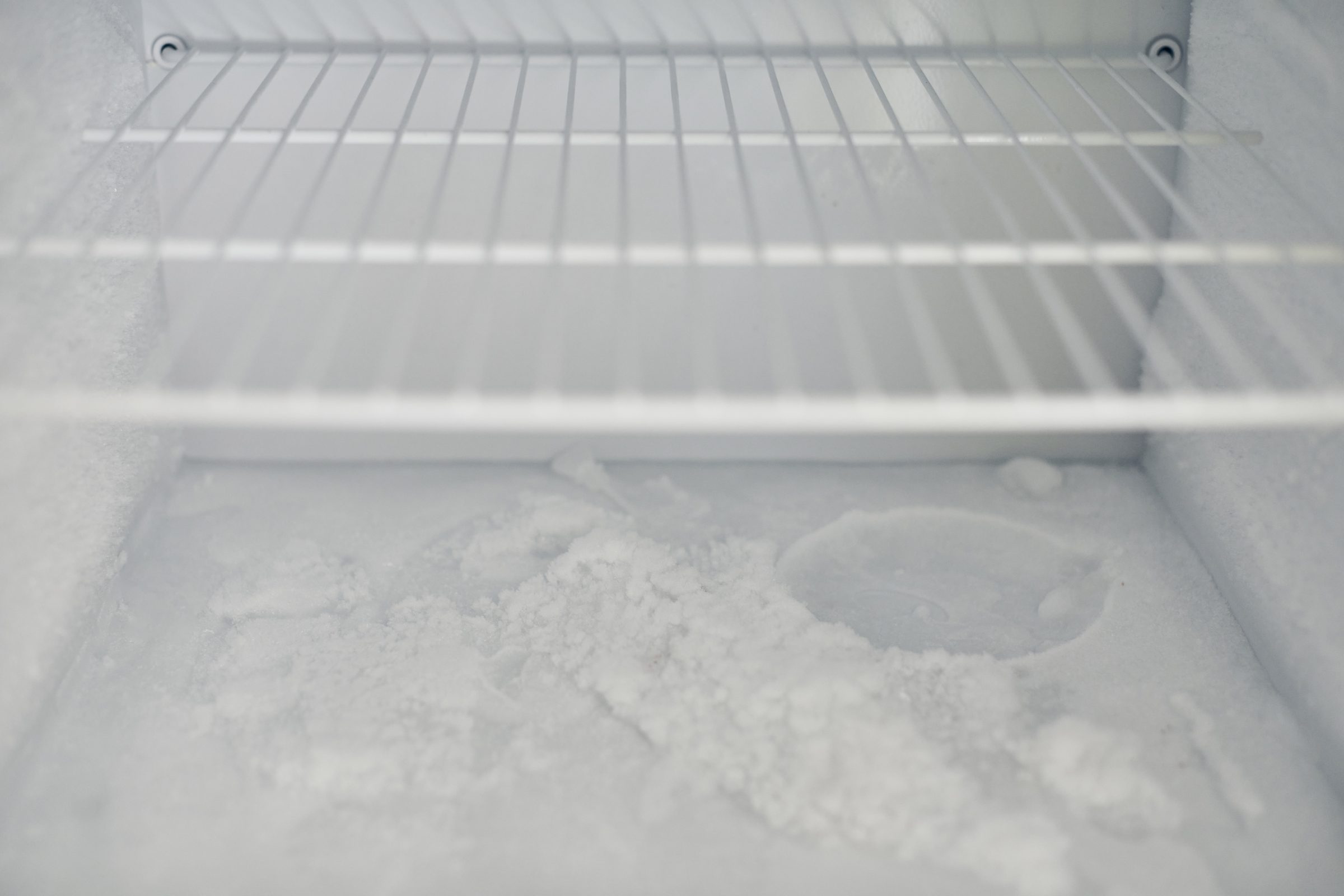
- “Ice on the rear wall of the cabinet”
- “Frost on food and packaging”
- “A drawer that has frozen shut”
Symptom
Thermador frost or ice building up
Ice on the back wall, frost on packages, or a drawer frozen into place. Frost is water that arrived from somewhere, and on a built-in column that is usually a door.
- From $95 diagnostic, credited to the repair
- 59 cities and neighborhoods covered
- OEM parts available on order
- In writing the price, before anything is opened
Five ordinary causes
What this usually turns out to be
Cheapest and commonest first, which is also the order we check them in. They sit hundreds of dollars apart, and only the unit settles which one is yours.
-
A door seal that has hardened
Warm humid air enters continuously and freezes on the coldest surface it meets. In this climate that happens quickly.
Refrigerator door and gasket repair from $220 -
A door left ajar
A drawer or a bottle holding the door off its seal by a few millimeters, which is enough. The door alarm usually says so first.
-
The defrost cycle not clearing
Ice builds on the evaporator, airflow drops, and the cabinet warms even though the compressor runs. This is a genuine repair.
Condenser and fan service from $280 -
A blocked drain
Melt water that cannot leave refreezes, often as a sheet under the drawers.
Condenser and fan service from $280 -
Humid air, honestly
An unconditioned garage or a kitchen open to the outside in August will frost a healthy cabinet faster than a sealed one indoors.
In five minutes
Before you call anybody
None of it needs tools, and all of it makes the visit shorter.
-
01
Paper test the seal
Four points a side, corners first. That is where seals give up and where frost usually starts.
-
02
Look at where the ice is
Rear wall points at defrost or airflow. Around the door points at the seal. Under the drawers points at the drain.
-
03
Check nothing is holding the door
A bottle in a rack or a drawer not pushed home keeps a door a fraction open all night.
-
04
Note whether the temperature is holding
Frost with correct temperatures is a different problem from frost with a cabinet that is drifting warm.
How it shows up
What people describe when they call
A shortcut
Narrow it down before anybody arrives
A description of the behaviour leaves a few possible causes. A code names the subsystem before anybody opens anything, which is why it is worth photographing before it clears.
If the display is showing something
Photograph it before it clears — codes do not wait. Search the full code list
In more detail
About Thermador frost or ice building up
Frost is a symptom of humidity, not of cold
A sealed cabinet has very little moisture to freeze. Persistent frost means warm, damp air is getting in — a door that is not sealing, or one being opened more than the cabinet can recover from — or that the defrost cycle is not clearing what does form.
Where the ice is tells you what it is
- On the rear wall — the defrost cycle, or airflow across the evaporator
- Around the door opening — the seal, or a door not closing square
- Under the drawers as a sheet — a blocked drain that cannot let melt water out
- On the food itself — usually the door being opened often in a very humid room
Why it matters beyond the nuisance
Ice on the evaporator blocks the airflow the cabinet depends on. The compressor then runs continuously, the temperature drifts anyway, and the appliance works far harder than it should for months before anything actually breaks. Frost is the visible early warning of that, which is why it is worth acting on rather than scraping off.
This article is based on:
- Official manufacturer documentation
- Internal repair procedures
- Technician repair history
- Company quality standards
Before you book
Questions about thermador frost or ice building up
Should I defrost it manually?
It clears the ice and it does not fix the cause, so it will come back. It is worth doing if the cabinet is struggling and you need it working now — but treat it as buying time rather than as a repair.
A little frost is normal, isn't it?
A light dusting that comes and goes with use, yes. A layer that grows week on week is not, and on a built-in column it is worth looking at early, because the same warm air that makes frost also makes the compressor run continuously.
The freezer frosts but the refrigerator is fine.
On separate columns those are two appliances, so it points at that door or that defrost cycle rather than at anything shared.
Where we do it
Across Miami-Dade, Broward, and Palm Beach
Same terms everywhere we go: an on-site diagnostic first, the price agreed in writing, and the exact figure confirmed once we have seen the unit.
Neighborhoods people ask for by name